




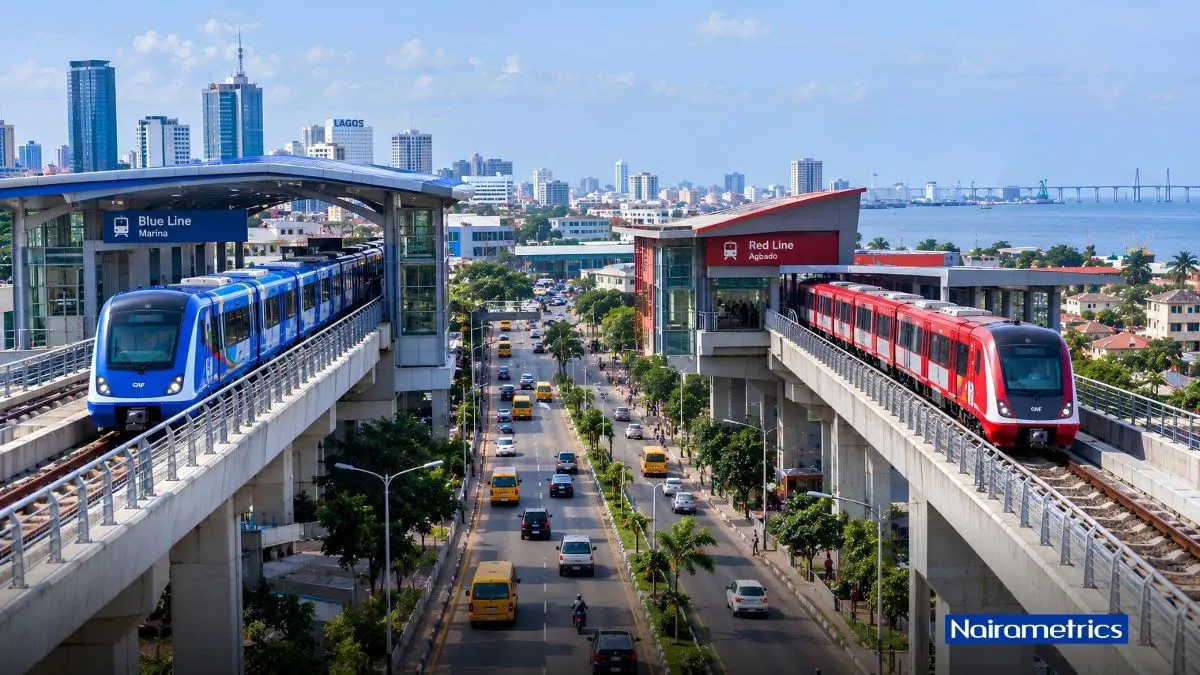
LAGOS, Nigeria — In an ongoing push to transform public transportation in Africa’s most populous megacity, Lagos State is advancing major rail infrastructure developments alongside new plans to link the network directly to air travel hubs. The multi-pronged strategy centers on expanding existing light rail corridors while introducing a dedicated monorail link to Murtala Muhammed International Airport (MMIA).
Efforts to bolster urban mobility have gathered momentum through phase expansions of the Blue Line, running along the Mile 2 to Marina coastal corridor, and operational enhancements across the Red Line corridor running through Ikeja. Complementing these developments, federal aviation authorities recently approved the design for a five-station monorail connecting the Ikeja Railway Station directly to MMIA Terminal 1. The planned route features stops at key transit nodes—including the Domestic Airport, Beesam, and Toll Gate—designed to streamline access for air travelers, airport workers, and daily commuters alike
Despite the ambitious vision, urban planners and commuters continue to raise critical questions regarding capacity and integration. Current peak-hour congestion on existing transit lines underscores the urgent need for higher train frequencies, adequate rolling stock, and seamless ticketing systems between municipal rail and regional services. Furthermore, spatial constraints around dense commercial zones in Ikeja pose engineering and logistical hurdles for the planned monorail interface.
As financing negotiations progress for the airport connection, state and federal transport officials face growing pressure to ensure that planned expansions deliver operational efficiency rather than bottlenecking current corridors. Transport experts emphasize that multi-modal connectivity—linking bus rapid transit (BRT), light rail, and airport rail—remains vital to permanently tackling traffic gridlock and supporting economic productivity across Lagos metropolis.