






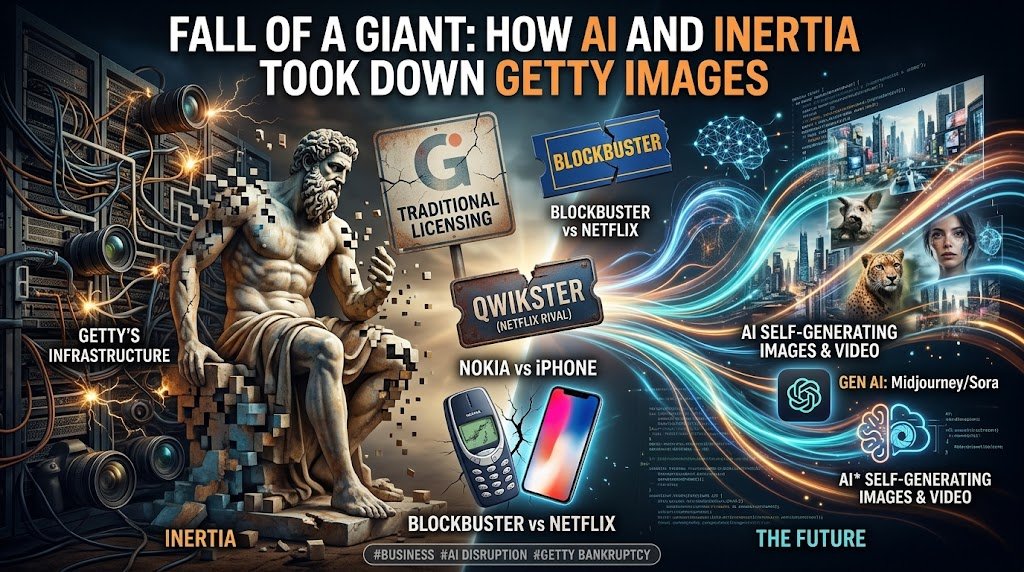
For decades, Getty Images stood as the undisputed powerhouse of visual licensing, holding a portfolio valued at nearly $4.8 billion. However, the rapid evolution of AI generative tools capable of creating instant, custom images and videos at a fraction of the cost shattered Getty’s revenue base. As customers bypassed traditional licensing models for hyper-realistic AI generation, Getty sought a lifeline through a proposed $3.7 billion joint merger with rival Shutterstock. When regulatory demands forced the cancellation of the partnership in July 2026, Getty was left saddled with over $2.1 billion in debt, ultimately forcing the visual titan to file for Chapter 11 bankruptcy.
Midjourney / Sora
Nokia (Symbian) Apple (iPhone)
Blockbuster / Qwikster Netflix (Streaming)
This downfall mirrors historic corporate blind spots where industry leaders underestimated disruptive technology:
Nokia and BlackBerry vs. Apple iPhone: Much like Nokia and BlackBerry dominated early mobile devices, they arrogantly dismissed full-touchscreen smartphones and app ecosystems until the iPhone redefined consumer demands, driving their market share to collapse.
Blockbuster vs. Netflix: Blockbuster was once offered the chance to partner with or acquire a young Netflix. Confident in its brick-and-mortar rental revenue, Blockbuster delayed pivoting to digital streaming, leading to its eventual bankruptcy while Netflix transformed global entertainment.
Getty’s failure to rapidly integrate generative visual tools relying instead on defensive legal battles and a failed joint partnership sealed its fate. It serves as a stark reminder that scale and legacy brand power cannot protect a business that refuses to adapt to technological shifts.


